

Washing Machine Repair
Washing Machine Leaking Water From the Bottom? Common Causes and What to Check
A puddle under a washing machine may come from an inlet or drain hose, pump, door seal, internal hose, or tub seal. Water can travel beneath the cabinet, so the puddle may not mark the source. Note whether it starts during filling, washing, draining, spinning, or while the washer is off; timing helps narrow the possibilities.
If water is spreading, stop the cycle. Keep away from standing water near electrical connections. Disconnect power only from a dry, safe position, and shut off the water supply if leaking continues.
Quick Answer
Check when the leak appears: during filling, inspect only visible water-supply or inlet connections; during draining, the drain hose, pump, or filter area may be involved; around a front-loader’s door, the seal or oversudsing may be contributing. If water spreads significantly or the source is unclear, stop using the washer and arrange an inspection.
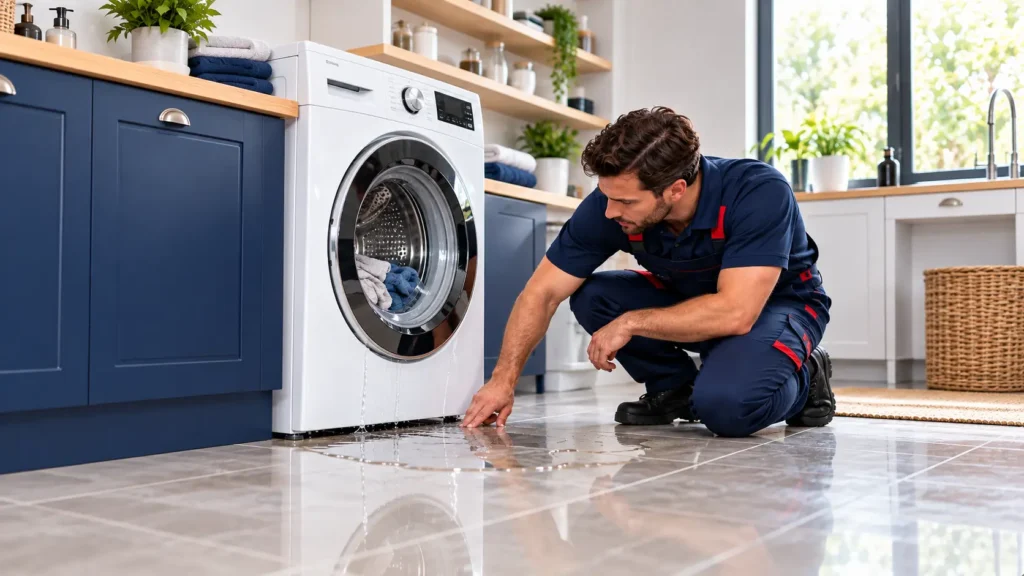
Why Is My Washing Machine Leaking Water From the Bottom?
Water can run from the back toward the front or move down from a door seal before collecting underneath. A leak inside may appear only when the pump or another water path is active.
If it is safe, note where the floor first becomes wet and which cycle stage is running. These observations help focus an inspection, but a puddle alone cannot identify a part.
1. Loose or Damaged Drain Hose
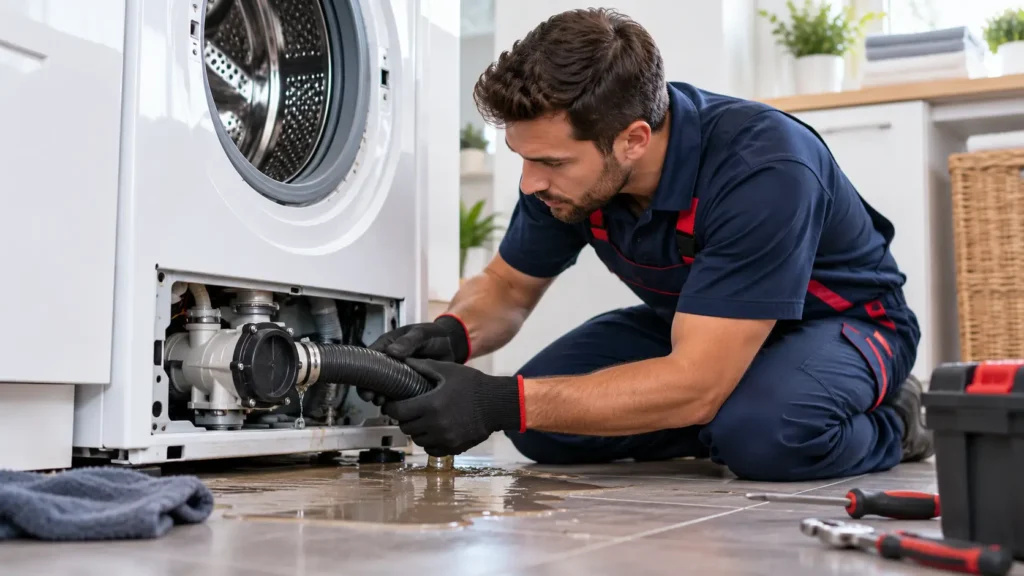
The drain hose carries used water away. A loose connection, crack, or hose shifted after the washer moved can leak, often while water is being pumped out. Water may first show behind the appliance and then spread underneath.
From a dry, safe position, look for dampness, a kink, split, or moisture around the visible connection. Do not pull the washer out if that could strain a hose or cable. If water stays in the drum, see our guide to a washing machine that is not draining.
2. Water Inlet Hose or Connection Leak
The inlet hose supplies water to the appliance. A loose fitting or worn hose can seep during filling, sometimes before the wash cycle is underway. Where hot and cold feeds are separate, either connection may be involved.
Supply-side seepage may continue while the washer is off. Look only at visible hoses and fittings; do not disconnect them. If water continues, close the accessible supply valves if safe and arrange an inspection.
3. Drain Pump, Filter Housing, or Drainage Problem
A leak during drainage may come from the drain pump, filter housing, hose, or a nearby connection. A damaged pump housing or worn seal can also let water escape, and the drum may retain water.
A pump or filter-area leak can resemble a hose leak from outside. Note whether water appears during discharge and whether water remains in the drum.
4. Damaged Door Seal
On a front-loading washer, a torn or displaced rubber door seal, or debris trapped against it, may let water escape during a cycle. It can run down the front and pool underneath, making the source look lower than it is.
When the washer is off and dry, look at the visible seal for a tear or trapped object. Do not stretch it or try to patch it. A split seal or recurring leak needs inspection.
5. Too Much Detergent or Excessive Foam
Too much detergent can create excess suds that escape around the door or another opening and collect on the floor. Foam does not automatically mean a mechanical component has failed.
Follow the washer and detergent instructions for the next load. Do not add other cleaning products to solve the leak. If water continues to escape, arrange a check.
6. Internal Hose or Clamp Problem
Internal hoses connect the dispenser, tub, and pump. A split hose or loose clamp can leak inside the cabinet, sometimes only when that water path is active.
Internal hose connections sit inside the cabinet and need a technician to inspect them.
7. Tub or Seal Problem
A tub-related leak or deteriorated seal can be more involved than an external hose. Water may escape only when the drum contains water or moves, then travel along the underside.
An inspection can distinguish a tub or seal fault from a simpler connection issue before you compare repair and replacement options.
When Does Your Washing Machine Leak?
The point in the cycle when the first moisture appears can help focus an external check.
It Leaks While Filling
A leak during filling may involve an inlet hose, supply fitting, dispenser path, or another part of the fill route. If seepage continues with the washer off, close the accessible supply valves if safe.
It Leaks During the Wash Cycle
During washing, consider the door seal, excess suds, or an internal hose. Note visible moisture or foam near the front, but do not keep running cycles to reproduce a significant leak.
It Leaks While Draining
A leak as water leaves the drum may involve the drain hose, pump, filter housing, or a nearby connection. Note whether water remains in the drum; timing alone cannot identify the part.
It Leaks During the Spin Cycle
Vibration can expose a loose connection, and the drain system may also be active. Note movement and where water first appears; spin timing does not prove the drum is the source.
It Leaks Even When the Washing Machine Is Off
Seepage while the washer is off may come from a pressurized supply connection or water moving from an earlier leak. If it continues, close the accessible water supply and seek help.
Leak Timing at a Glance
Use this table to organize observations before an inspection.
| When the Leak Appears | Possible Areas to Check | What the Homeowner Can Observe |
|---|---|---|
| While filling | Inlet hose or water connection | Look for visible moisture around external supply connections. |
| During washing | Door seal, detergent, or internal water path | Notice suds, the front seal area, and when the floor first becomes wet. |
| While draining | Drain hose, pump, or filter housing | Note whether the leak starts as water is discharged and whether water remains in the drum. |
| During spin | Drainage, seal, or movement-related connection | Record vibration and the first place water appears. |
| While switched off | Water-supply connection | Check whether seepage continues without an active cycle; shut off supply if needed. |
What Can You Safely Check Yourself?
If the leak is small and the area is safe, make a few external observations. Stop the cycle first. Do not step into standing water or touch a plug or control if the area is wet.
- Stop the cycle and keep clear of standing water.
- Unplug only if the plug and route are dry and safely reachable; otherwise keep clear.
- Close accessible water-supply valves if leaking continues.
- Visually inspect external inlet and drain hoses and connections without disconnecting them.
- When off and dry, look at the door seal and note excess suds.
- Record when and where water appears, whether the drum retains water, and any unusual movement.
Do not remove panels, dismantle a pump, handle wiring, or work near live electricity. Internal components should be inspected by a qualified technician.
When Should You Call a Washing Machine Technician?
These signs can help you decide when to call a technician. Stop using the washer and keep clear if water is significant, an electrical smell appears, or power trips. Mention any recent installation or move when you call.
- Water continues after the cycle stops.
- The leak returns or appears to come from inside the cabinet.
- A pump, filter housing, door seal, tub, or internal hose may be involved.
- There is an electrical smell, unusual behavior, or tripped power.
- The source cannot be identified safely from visible checks.
When you call, share when the leak starts and what you safely observed.
Repair or Replace a Leaking Washing Machine?
A leak does not automatically mean replacement. Consider the washer’s age and condition, repair history, leak source and severity, and the availability and cost of the required part.
- Age and overall condition of the appliance.
- Whether previous faults were isolated or recurring.
- Whether the source is a hose, seal, or tub-related component.
- Required parts and their availability for the model.
- Whether the repair makes sense for the washer’s condition and how long you expect to keep using it.
A hose or door-seal issue differs greatly from major tub damage. Get the source identified before comparing options; do not decide from the puddle alone.
Washing Machine Repair in Sharjah
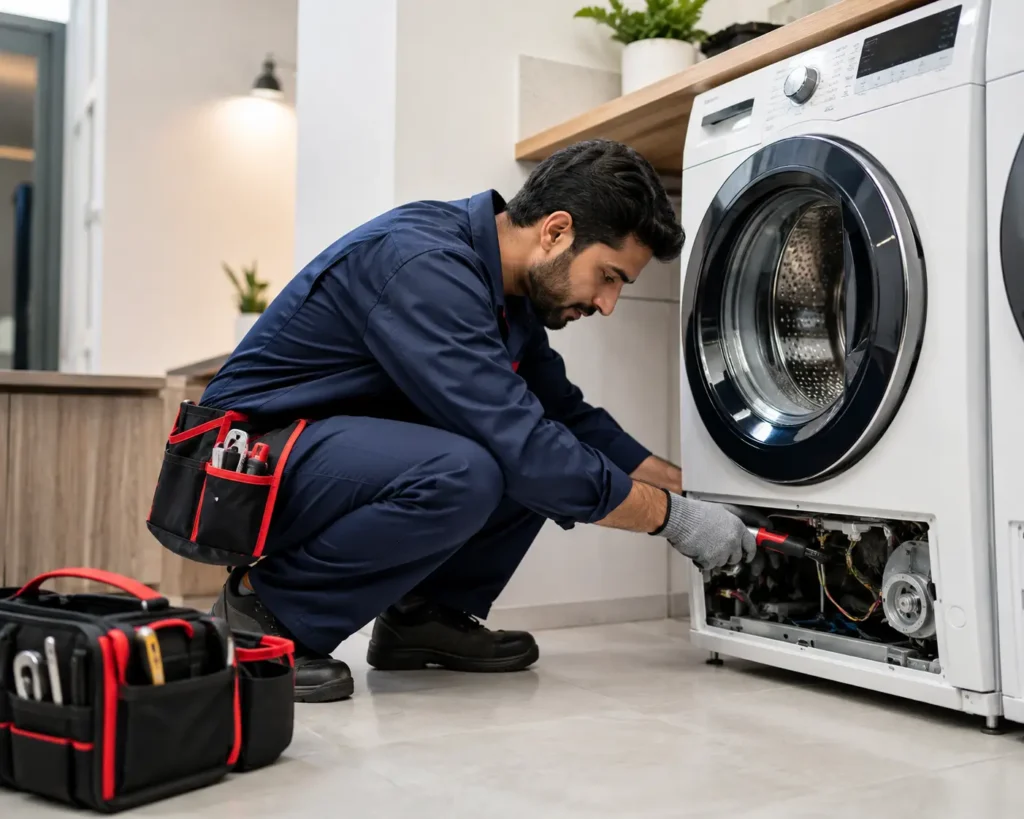
If you need a technician to check a hose, drainage path, pump, or seal, see the washing machine repair service in Sharjah page.
Need Help With a Leaking Washing Machine?
If the leak returns or appears to come from inside the washer, Midland Appliance Repair can inspect it and identify the source.
Frequently Asked Questions
If it leaks only during spin, vibration or active drainage may expose a loose connection or seal. Stop the washer if water is significant and note where it first appears.
Water may travel along the underside, so the puddle may be away from the source. From a dry, safe position, look for visible moisture around external hoses.
A restriction can affect drainage and contribute to leakage along the drain path. If water remains in the drum, stop further cycles and note that for the technician.
Stop using it if the leak is significant, recurring, or near electrical connections. Keep clear of standing water and shut off the water supply if safely accessible.
A leak during draining can involve the drain hose, pump, filter housing, or a nearby connection. Note whether water remains in the drum and share that with the technician.
Yes. Too much detergent can create suds that escape. Follow the washer and detergent instructions; if the leak recurs, stop the cycle and arrange an inspection.