

Washing Machine Not Spinning? Common Causes and Repair Options
Washing machine not spinning properly? Learn the common causes, warning signs and when professional washing machine repair may be needed in Sharjah.
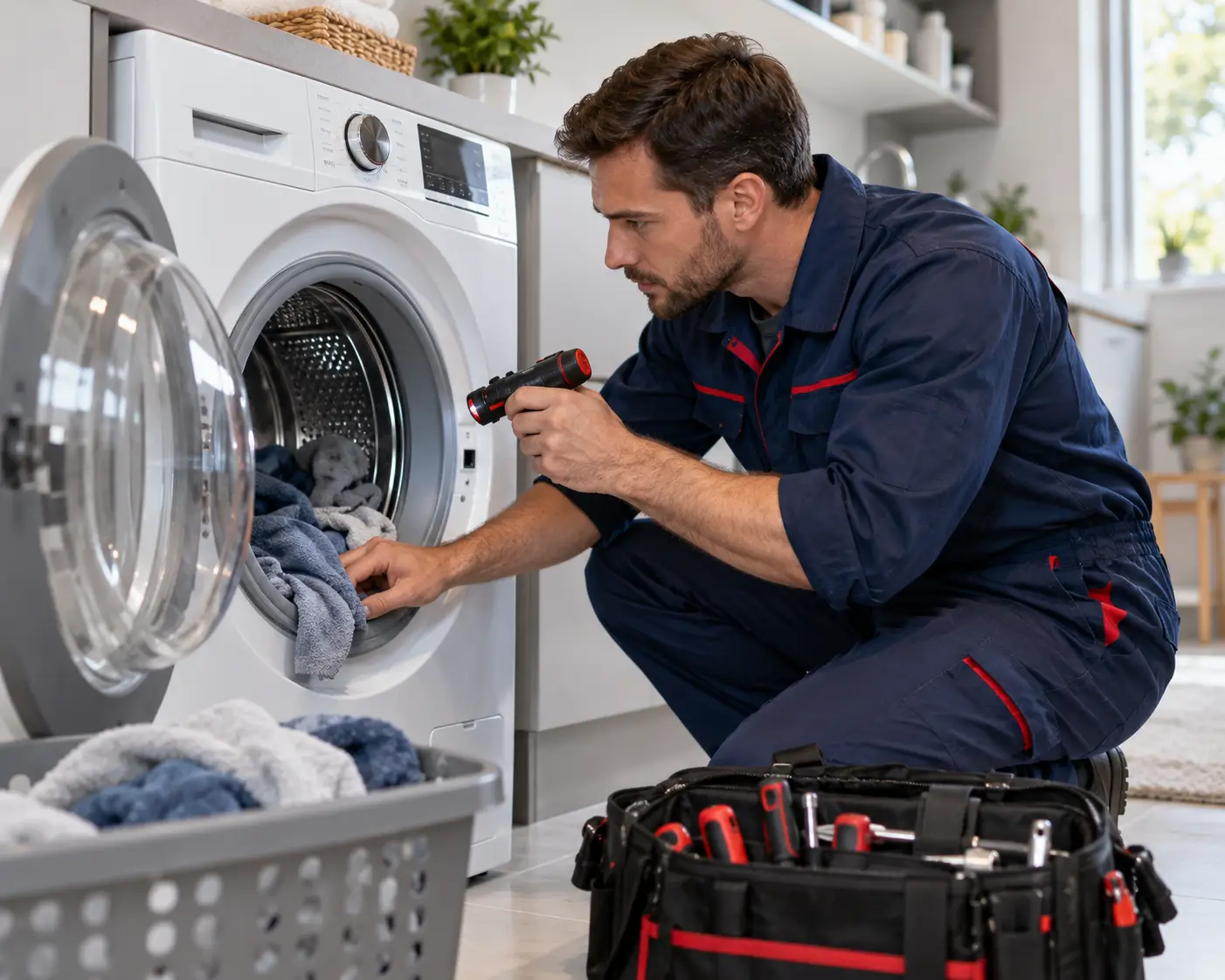
A washing machine that completes the wash cycle but refuses to spin can leave clothes soaking wet and turn a simple laundry day into a frustrating problem. Sometimes the cause is something minor, such as an unbalanced load. In other cases, the machine may have a problem with the motor, drainage system, drive belt or electronic controls.
Understanding the possible causes can help you decide whether the problem can be corrected easily or whether your washing machine needs professional attention.
Why Is My Washing Machine Not Spinning?
The spin cycle depends on several parts of the washing machine working together. Before the drum can reach high speed, the machine normally checks that the door is securely closed, water has drained correctly and the load is reasonably balanced.
If one of these conditions is not met, many modern washing machines will stop or reduce the spin cycle to protect the appliance.
Here are some of the most common reasons.
- The Washing Machine Load Is Unbalanced
An uneven load is one of the simplest causes of a washing machine that will not spin properly.
Heavy items such as towels, blankets or bedsheets can collect on one side of the drum. When this happens, the washing machine may detect excessive vibration and prevent the drum from reaching full spin speed.
Try switching the machine off and redistributing the clothes evenly inside the drum. If the problem only happens when washing heavy loads, load balance may be the main cause.
However, if the machine regularly becomes unstable even with normal loads, the suspension system or other internal components may need inspection.
- The Washing Machine Is Not Draining Water
Most washing machines will not begin a full-speed spin while water remains inside the drum.
A drainage problem may therefore appear to be a spin-cycle fault.
Possible causes include:
- blocked drain filter
- clogged drain hose
- damaged drain pump
- objects trapped inside the drainage system
- kinked or incorrectly positioned drain hose
If you can see water remaining inside the drum after the cycle ends, the drainage system should be checked before assuming there is a motor or drum problem.
- The Door or Lid Is Not Locking Properly
Modern washing machines include a safety system that prevents high-speed spinning when the door is not securely locked.
A faulty door lock, lid switch or door sensor can therefore stop the spin cycle even when the door appears to be closed.
Common signs include:
- machine starts but stops before spinning
- door-lock warning appears
- clicking sounds around the door lock
- machine repeatedly tries to start the spin cycle
- error code displayed on the control panel
The locking mechanism should not be forced because this can damage the door assembly.
- The Drive Belt May Be Worn or Broken
Many washing machines use a drive belt to transfer power from the motor to the drum.
Over time, the belt can become loose, stretched or damaged. In some cases it can break completely.
When this happens, you may notice that the washing machine fills and drains normally but the drum does not rotate correctly.
A loose or damaged drive belt normally requires opening the appliance, so inspection and replacement should be handled carefully.
- Motor Problems
The motor is responsible for rotating the washing machine drum during washing and spinning.
Motor-related problems can include:
- worn motor components
- damaged wiring
- faulty motor sensor
- overheating
- electronic motor-control faults
A machine with a motor problem may rotate slowly, stop during the cycle or fail to spin completely.
Motor faults should generally be diagnosed by a technician because replacing parts without proper testing can lead to unnecessary expense.
- Faulty Speed Sensor
Many modern washing machines use a sensor to monitor how quickly the drum is rotating.
If the sensor sends incorrect information to the control board, the machine may stop the spin cycle or display an error.
The drum might still rotate during washing while failing to reach the required speed during spinning.
Because sensor faults can resemble motor or control-board problems, proper diagnosis is important.
- Suspension or Shock Absorber Problems
The suspension system keeps the washing machine drum stable during high-speed spinning.
Worn shock absorbers, springs or suspension components can cause:
- excessive shaking
- loud banging
- machine moving across the floor
- repeated interruption of the spin cycle
Modern machines may automatically reduce spin speed when excessive movement is detected.
Ignoring this problem can put additional strain on other components.
- Electronic Control Board Problems
The control board manages the different stages of the washing cycle.
If it develops a fault, commands may not reach the motor, drain pump, door lock or other components correctly.
Control-board problems are less common than blocked filters or load-balance issues, so other possible causes should usually be checked first.
What Can You Check Before Calling a Technician?
There are a few safe checks you can perform without opening the washing machine.
First, switch the appliance off and disconnect it from power.
Then check:
- whether the drum is overloaded
- whether clothes are evenly distributed
- whether water remains inside the drum
- whether the drain hose is bent
- whether the accessible drain filter is blocked
- whether the door closes properly
- whether an error code is displayed
If the problem continues after these basic checks, further dismantling of the washing machine is generally better left to an experienced repair technician.
Can a Washing Machine Spin Problem Get Worse?
Yes.
Continuing to operate a washing machine with excessive vibration, drainage problems or unusual mechanical noises can place additional strain on components such as the motor, bearings, suspension and drum assembly.
Early diagnosis can sometimes prevent a relatively small fault from developing into a more expensive repair.
Repair or Replace the Washing Machine?
A spin-cycle problem does not automatically mean that the washing machine should be replaced.
Many common faults can be repaired by replacing or servicing a specific component.
The decision depends on factors such as:
- age of the appliance
- overall condition
- cost of the required repair
- availability of replacement parts
- frequency of previous faults
A proper diagnosis is useful before deciding to purchase a new appliance.
Professional Washing Machine Repair in Sharjah
If your washing machine is not spinning, draining, starting correctly or completing its cycle, the problem may require further inspection.
Midland Appliance Repair provides washing machine repair in Sharjah for common problems including spin-cycle faults, drainage issues, unusual noises, leaks and other appliance problems.
For professional assistance, visit our washing machine repair service page:
https://midlandappliancesrepair.com/washing-machine-repair-sharjah/
Suggested anchor text inside Elementor:
washing machine repair in Sharjah
Frequently Asked Questions
Why is my washing machine washing but not spinning?
This can happen when the machine has a drainage problem, unbalanced load, faulty door lock, worn drive belt, motor fault or another component preventing the spin cycle from starting.
Why are my clothes still very wet after the spin cycle?
The machine may not be reaching its normal spin speed. An unbalanced load, drainage restriction or mechanical problem can leave excess water in the clothes.
Can a blocked filter stop a washing machine from spinning?
Yes. If a blocked filter prevents water from draining properly, many washing machines will not begin the full-speed spin cycle.
Why does my washing machine shake badly when spinning?
Uneven loads, incorrect machine leveling, worn shock absorbers or suspension problems can cause excessive movement during spinning.
Should I continue using a washing machine that is not spinning?
If the problem keeps occurring, particularly with unusual noises, water remaining inside the drum or excessive shaking, it is better to have the appliance inspected before continued use.
Key points
- Start by checking the load balance, drainage and whether the washing machine door is locking properly.
- Water left inside the drum can prevent the machine from entering a full spin cycle.
- Stop using the machine if you notice loud banging, burning smells or repeated spin failures.
- Motor, drive belt, suspension or sensor faults may require professional diagnosis.
- Keep the model number and any displayed error code ready when booking a repair.
Need help with an appliance problem?
Contact Midland Appliance Repair to discuss the appliance and arrange a suitable service visit.